The useful answer
A website redesign changes the experience deliberately: its content, structure, presentation and visitor journeys. It should begin with an inventory of the current website and a decision about what to retain, rather than treating a new visual style as a reason to discard useful pages or important URLs.
Reviewed · BeyondPHP
Find the reason for a redesign
A dated appearance may be the visible problem while the real difficulty is buried service information, confusing navigation or an unclear enquiry process. We review the current offer and the tasks visitors need to complete. Existing search data, customer questions and enquiry feedback can inform that review when you have them; their absence is recorded rather than replaced with invented performance figures.
Keep the recognition that matters
A redesign can retain the logo, a familiar colour palette, useful photography or the overall character of the business. It can also introduce a fresh direction. We make those choices explicit, alongside the content worth keeping. The approved sitemap should explain where existing pages move and which material is consolidated, corrected or retired, with no assumption that every old page deserves a direct copy.
Review journeys, not isolated screens
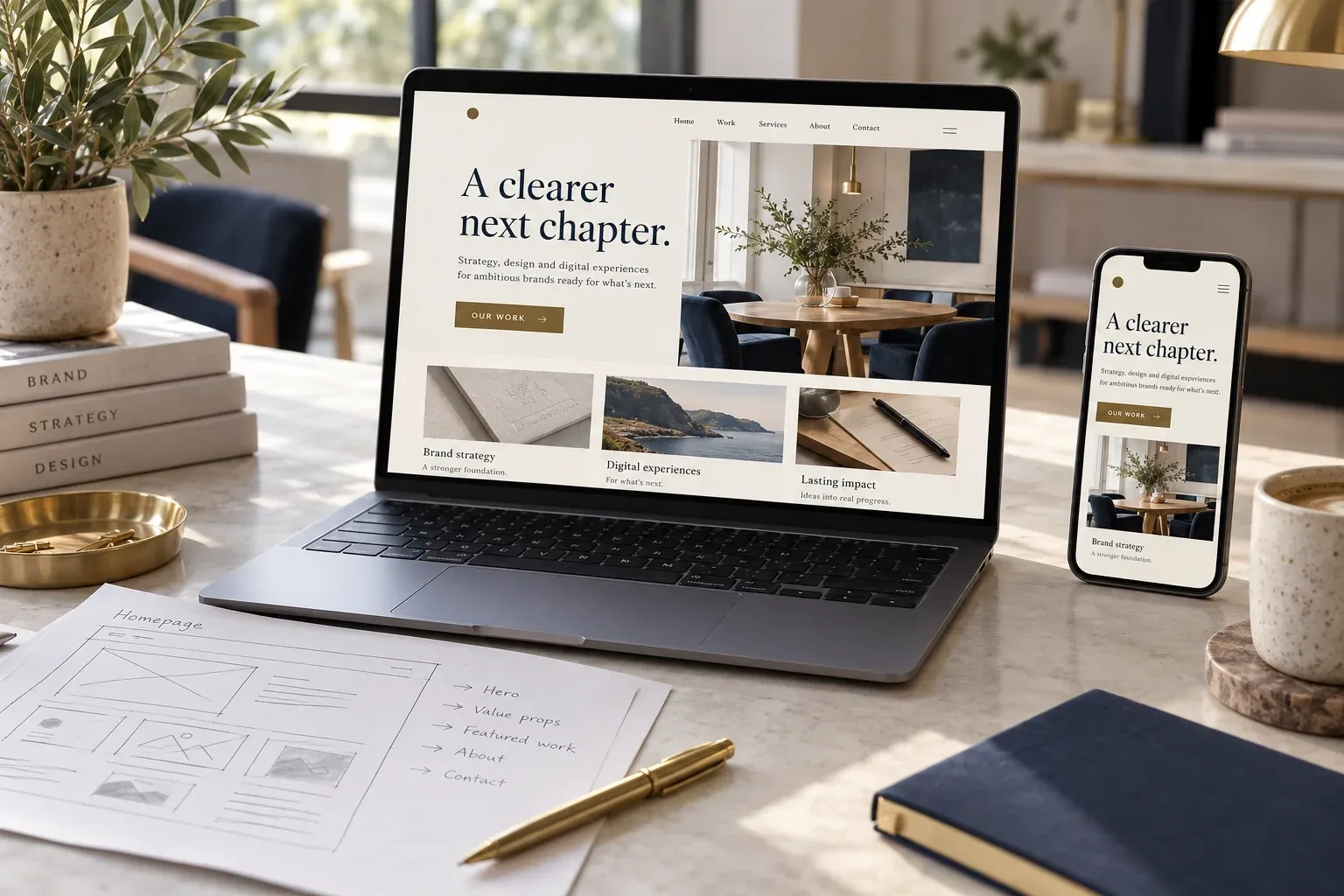
A homepage mockup is only part of the work. Review a service page, a longer information page, navigation and the actual contact route on mobile. Use representative content during that review so headings, images and calls to action are tested at realistic lengths. Consolidated feedback from a named approver helps keep design decisions consistent across the website.
Prepare the move before launch
If addresses change, plan the old-to-new mapping and the necessary redirects. Check important metadata, media, downloads and links while the new version is still a preview. Confirm what will happen to existing forms and connected services. A launch plan should include a recoverable previous version and follow-up checks; a redesigned website cannot promise unchanged search positions.
A practical next step
What to prepare.
- Explain the current friction
Identify what customers struggle to find or understand, using actual questions and feedback where available.
- Choose what remains recognisable
Mark logos, imagery, wording and visual elements that carry value for the business.
- Inventory existing destinations
Include important URLs, downloadable documents, forms and connected services in the transition review.
- Agree one approval path
Name the person who consolidates feedback and signs off the new structure and design.
Questions worth asking.
Can you keep the overall look?
Yes, where it suits the brief. We can preserve recognisable elements while improving layout, content and mobile usability.
Do we have to change every page?
No. Existing material can be retained, refreshed or consolidated according to its usefulness and the agreed scope.
Is a redesign the same as migration?
They can happen together, but changing the visual experience and changing the delivery approach are separate decisions.
Can you promise no search traffic change?
No. We can plan URL continuity and check the transition, but search visibility may fluctuate.
Who should provide feedback?
A named approver should consolidate business and stakeholder feedback. This avoids conflicting instructions across individual pages.
When does the old site come down?
Only through an agreed launch process. Review the new preview, transition details and recovery steps before replacing it.