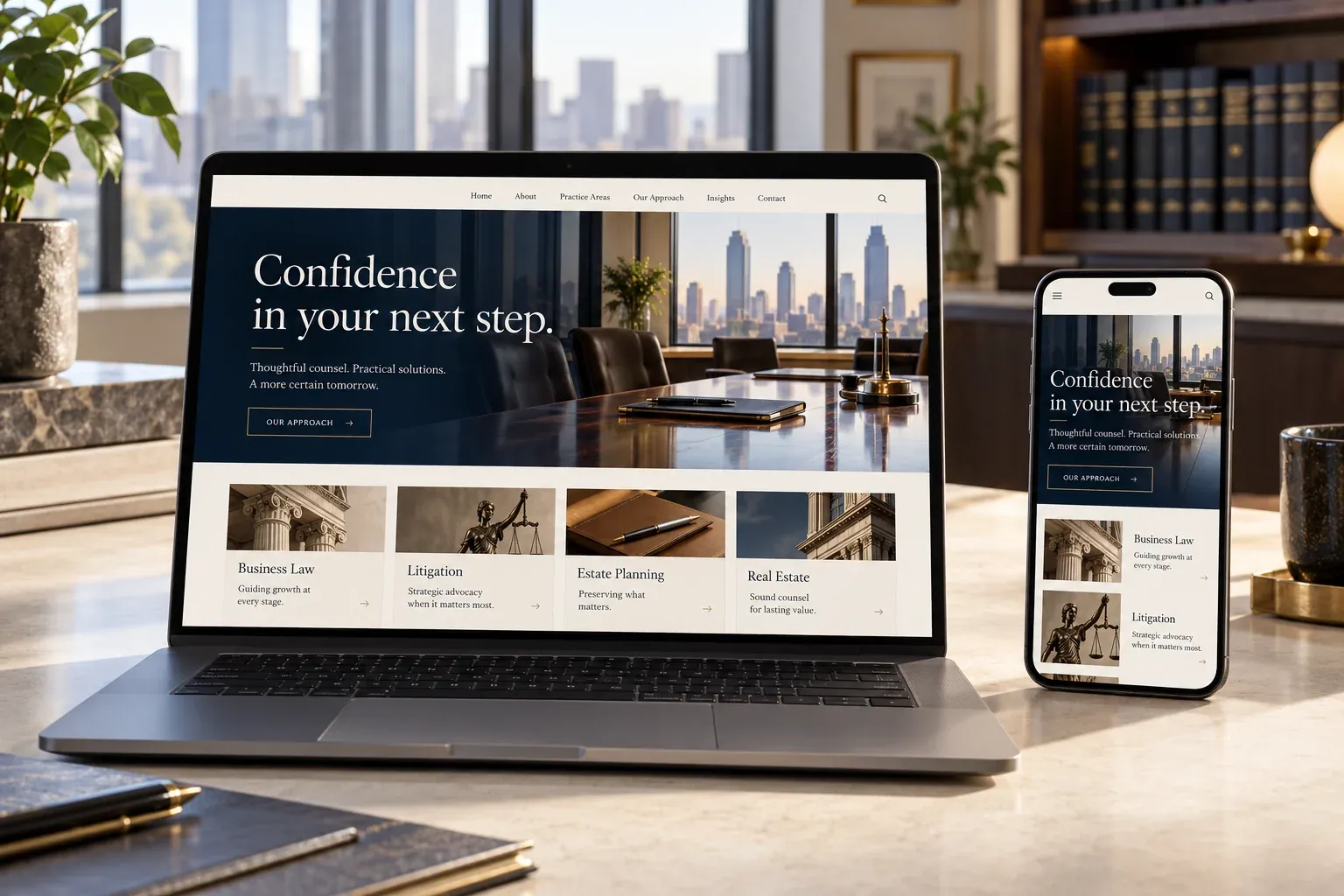
The useful answer
A legal-services website should explain practice areas, professional identity and the initial-contact process. Its content needs approval by the responsible practice. A public enquiry should not imply that a client relationship has been accepted or invite unnecessary confidential case details; those boundaries belong to the practice’s actual intake procedure.
Reviewed · BeyondPHP
Describe relevance in language clients understand
Practice areas should help a visitor recognise whether an initial discussion is appropriate. Explain the kind of work the practice considers and the context it needs, without promising an outcome for a hypothetical case. Organise specialist detail so it supports understanding rather than becoming a dense list of legal terms. Jurisdiction and professional status must come from the practice’s approved facts.
Keep professional identity accurate
Profiles, qualifications, regulatory references and office information require a named reviewer. Do not infer membership, admission or authority from a job title or image. Case descriptions and experience statements should use material the practice is permitted to publish. If evidence cannot be shared, clear service explanations and a transparent process are preferable to invented success rates or disguised fictional case studies.
Make the intake boundary visible
The initial enquiry can ask for a name, contact method and a short general description when the practice approves those fields. Explain that detailed or sensitive documents should use the agreed secure route. The website must not present a sent message as accepted representation, a completed conflict check or legal advice. The practice’s actual intake wording should control that distinction.
Plan review for changing information
Articles and service explanations can become outdated. Assign editorial responsibility and distinguish general information from advice for a particular situation. A useful publishing workflow includes review dates and a way to correct or retire material. The design should support readable long-form content, clear author information when genuine and straightforward contact details on mobile.
A practical next step
What to prepare.
- Approve practice-area scope
Provide the work the practice accepts and the professional wording that describes it accurately.
- Verify profile material
Supply approved roles, credentials, photographs and any public regulatory references.
- Define the intake notice
Specify what an initial message means and what confidential information should use another route.
- Name the editorial owner
Choose who reviews general information and keeps published professional details current.
Questions worth asking.
Can the website publish legal articles?
Yes, with a responsible practice reviewer, an appropriate review process and a clear distinction from individual legal advice.
Should an enquiry form accept case documents?
Only through a separately approved intake route. An initial public enquiry should not casually collect confidential files.
Can we include outcomes from past work?
Only accurate, authorised material the practice is permitted to publish should be used; no results are invented.
Does submitting a form create a client relationship?
The practice’s terms and intake process determine that. The website should not imply acceptance merely because a message was prepared or sent.
Can several practice areas have their own pages?
Yes, when each page answers a distinct client question and contains approved, relevant content.
Will the website claim offices in target countries?
Only genuine offices should be represented. Remote service coverage must not be disguised as a physical location.