
Protect the accounts that control the site
Domain, hosting and business email access can affect a website even when its public pages contain little application logic. Know who owns each account and how authorised access is granted and recovered. Strong account protections and limited permissions matter because an attacker who controls delivery can replace otherwise well-built pages.
A clearer picture
What happens when someone visits?
A website can prepare its pages before a visit, or assemble a response when a request arrives. The difference is where the work happens—not whether the design looks modern.
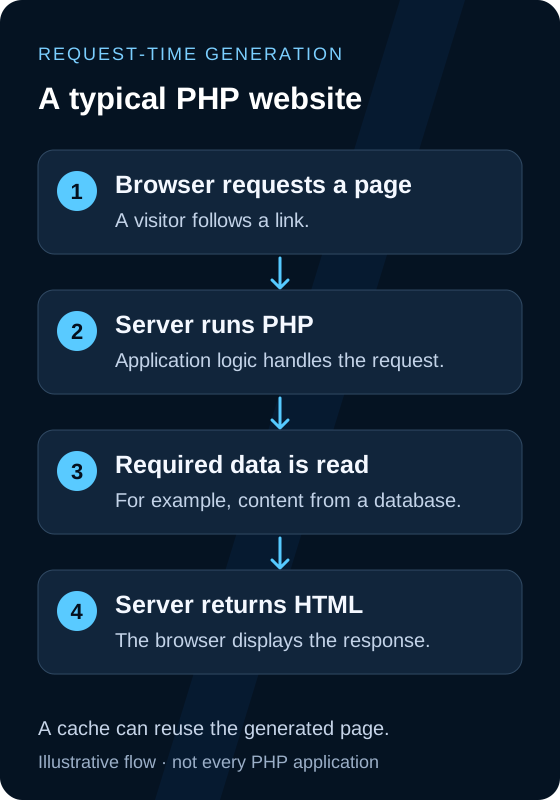
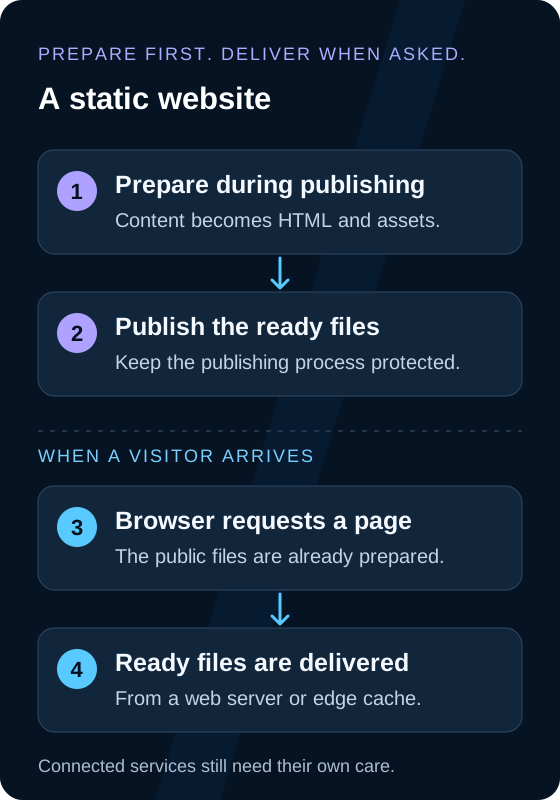
A delivery model alone does not guarantee speed or security. Images, scripts, caching, hosting, access and connected services all affect the result.
Compare performance, security and ongoing care ↗Review what the site connects to
Forms, booking tools, analytics and payment destinations introduce their own data flows and responsibilities. Remove unused connections and understand the purpose of those retained. A visible payment-provider logo is not evidence that a checkout destination is authentic. Important changes to external links and integrations should be reviewed like other business-critical content.
Make recovery a routine responsibility
Maintain recoverable source and a known release procedure. Record who can approve changes and how a mistaken release can be reversed. Keep private files and credentials out of public assets. Review dependencies and updates proportionately to what the site actually uses. A security claim should describe verified controls and limits rather than promising that attacks are impossible.
A practical next step
What to prepare.
- Ownership register
List account owners and recovery contacts without collecting secrets in the website brief.
- Connection inventory
Identify each external service and the information it receives.
- Recovery evidence
Confirm that a previous release can be recovered through an agreed procedure.
Questions worth asking.
Does a static site need maintenance?
Yes. Content, account security, delivery tooling and connected services still need ownership.
Can a website be called unhackable?
That is not a responsible guarantee. Describe the actual controls and remaining responsibilities.
Should credentials be placed in source files?
No. Public assets and versioned source must not contain private access material.
Sources & further reading.
Primary documentation for the factual background. Our project recommendations depend on your requirements.
OWASP — Top 10 Primary security reference. A short educational guide does not replace an application or infrastructure assessment.