
Prepared pages, flexible presentation
Think of a set of finished documents ready to serve when a visitor requests them. The layout can still adapt to a phone, galleries can respond to input and links can connect to other services. The important distinction is where page content is prepared. A polished visual experience does not require a content database behind every public page.
A clearer picture
What happens when someone visits?
A website can prepare its pages before a visit, or assemble a response when a request arrives. The difference is where the work happens—not whether the design looks modern.
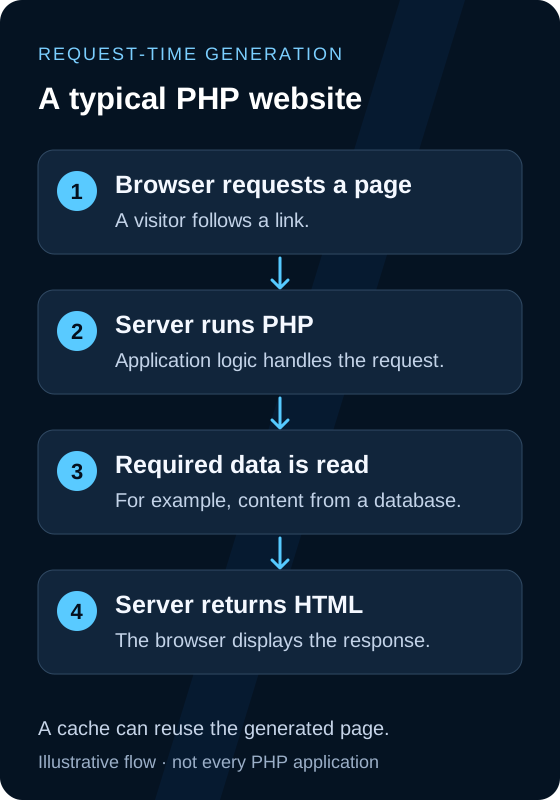
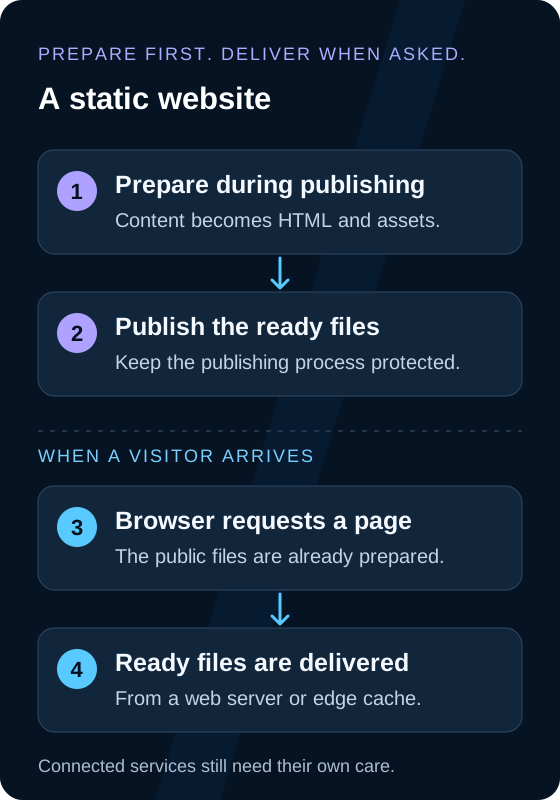
A delivery model alone does not guarantee speed or security. Images, scripts, caching, hosting, access and connected services all affect the result.
Compare performance, security and ongoing care ↗Where the approach often fits
Company profiles, service pages, campaign landing pages and curated catalogues are useful candidates when the content and update process are manageable. A site can contain many pages without becoming an application. The decision depends on how information changes and what visitors need to do, rather than a rule that static means only one small page.
What needs an explicit plan
Accounts, live stock, transactional checkout and availability-driven booking require appropriate operational services. Content editing also needs an agreed workflow: who requests changes, who reviews them and how updates reach the site. A static delivery model can simplify part of a website, but it does not make ownership, maintenance or connected services disappear.
A practical next step
What to prepare.
- List visitor tasks
Separate reading and enquiries from transactions and personal accounts.
- Describe content changes
Estimate which pages change, how often and who approves them.
- Identify live information
Mark anything that must reflect current stock, availability or private data.
Questions worth asking.
Does static mean no animation?
No. Motion and interactive presentation are separate from how a page is prepared and delivered.
Can a static site have many pages?
Yes. The content structure and maintenance process determine whether that remains practical.
Does it remove all ongoing costs?
No. Domains, updates and any connected operational services can still require time or money.
Sources & further reading.
Primary documentation for the factual background. Our project recommendations depend on your requirements.
MDN — Introduction to the server side Background on static and dynamic delivery; presentation features and business suitability still need separate assessment.